Migrate before the booking cutoff
Quandoo says new reservations can be made only until 30 September 2026, with consumer services ending on 1 October.
Compare Quandoo alternatives for restaurants that need to replace online reservations before Quandoo stops new bookings on 30 September 2026.
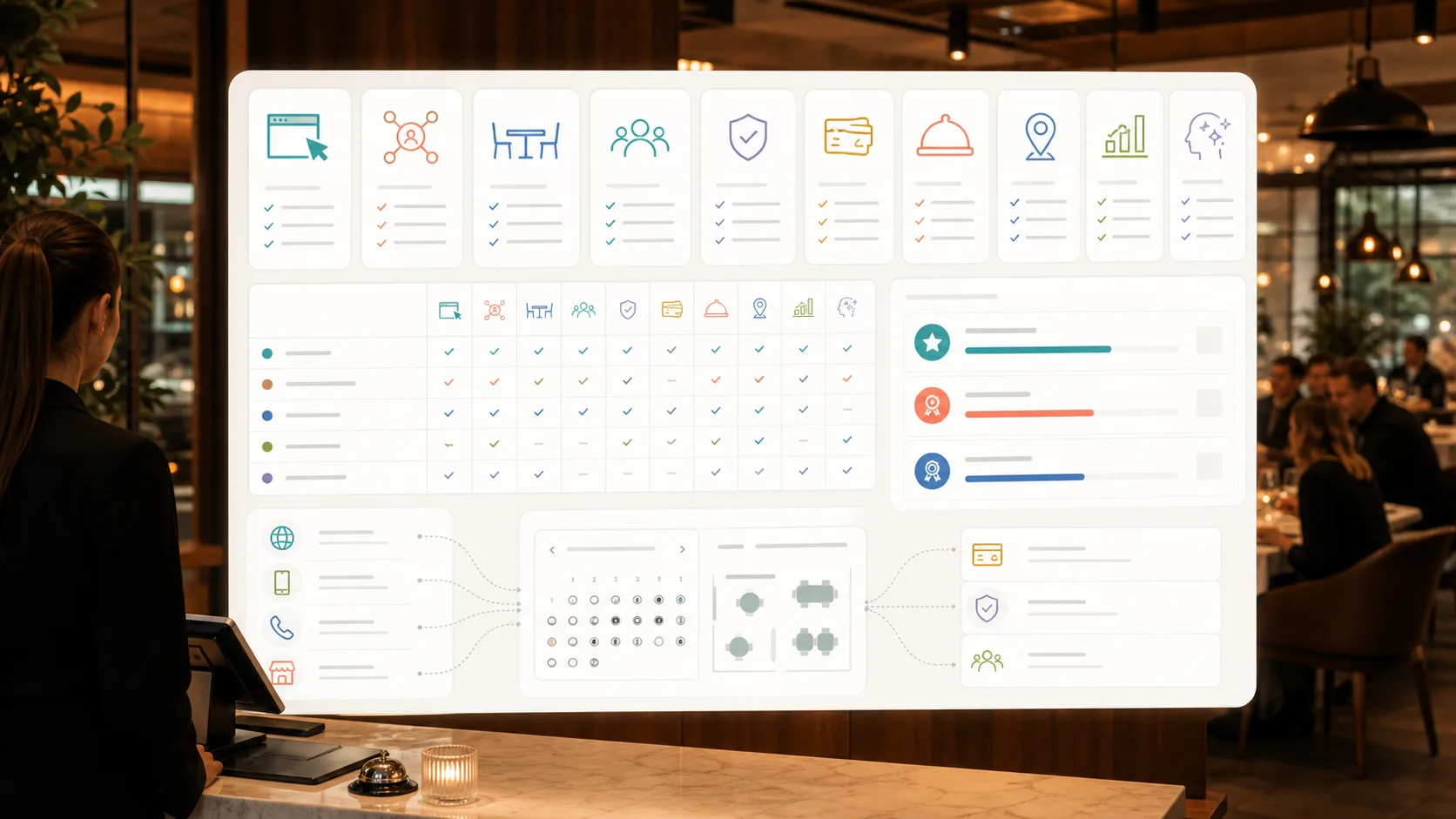
Quandoo restaurants should treat 30 September 2026 as the practical booking cutoff and choose a replacement based on demand source. Reslify is the stronger fit when the restaurant wants branded direct bookings, Google and website conversion, owned guest context, flexible payment rules, add-ons, and no per-booking commission on standard direct reservation intake.
Quandoo says new reservations can be made only until 30 September 2026, with consumer services ending on 1 October.
Reslify is built for branded direct bookings, Google visibility, payment rules, add-ons, and owned guest context.
Pick based on whether the restaurant needs direct conversion, marketplace discovery, CRM depth, or prepaid experiences.
Quandoo restaurants should start replacement work now. Quandoo announced on 24 March 2026 that it is ceasing operations. The platform says new reservations can be made and fulfilled only until 30 September 2026, consumer services will no longer be available from 1 October 2026, and the remaining infrastructure will go offline on 31 December 2026.
That turns a normal software comparison into a migration decision. Restaurants do not only need "another reservation widget." They need a clean path for website bookings, Google bookings, existing guest communication, future availability, staff workflow, guest data, payment rules, and source reporting before the cutoff.
The best Quandoo alternative depends on what Quandoo was doing for the restaurant:
The most important fact is timing. Restaurants that wait until September will be trying to change booking systems while future reservations, guests, staff habits, website links, and Google routing are all under pressure.
| Date | What Quandoo says | What restaurants should do |
|---|---|---|
| 24 March 2026 | Quandoo announced that it would cease operations after a planned wind-down. | Start vendor evaluation, data planning, and channel audit. |
| 30 June 2026 | Quandoo stopped loyalty-point earning on reservations after this date. | Treat loyalty-related guest messaging as historical and avoid promising future Quandoo rewards. |
| 30 September 2026 | Last date for making new reservations and dining through Quandoo. | Have the replacement booking path live before this date, not on the day itself. |
| 1 October 2026 | Quandoo consumer services, including reservations and accounts, will no longer be available. | Make sure website, Google, social, email, QR, and staff booking paths no longer point guests to Quandoo. |
| 31 December 2026 | Remaining Quandoo infrastructure will go offline. | Complete data retention, reporting, account, and operational cleanup before year-end. |
As of 24 July 2026, the 30 June loyalty milestone has already passed. The next practical deadline is 30 September 2026.
Quandoo was not only a booking button. Its public site still describes restaurant discovery and booking across multiple country sites, while its shutdown notice explains how consumer accounts, loyalty points, reservations, and infrastructure wind down. A restaurant moving away from Quandoo should therefore replace the whole reservation path, not just the visible widget.
Before choosing a vendor, map these areas:
The restaurant that does this well will not just survive the Quandoo shutdown. It can come out with a cleaner direct booking system than it had before.
There is no single replacement that fits every Quandoo restaurant. A Berlin bistro, a London hotel restaurant, a Turkish seaside venue, a Singapore group, and an Australian premium dining room may need different tradeoffs.
Use this shortlist by job:
| Alternative | Best for | Main strength | Watch-out |
|---|---|---|---|
| Reslify | Restaurants that want branded direct booking, Google and website conversion, AI-guided booking, flexible payment rules, add-ons, gift cards, and owned guest context. | Focused direct booking platform with no per-booking commission on standard direct reservation intake. | Not a consumer marketplace; restaurants that mainly want rented diner discovery may still use a marketplace alongside direct booking. |
| OpenTable | Restaurants that want marketplace discovery plus mature reservation and table-management tooling. | Large diner network, reservation management, table management, guest profiles, marketing tools, experiences, deposits, credit card holds, and published US plans. | Plan fees, cover fees, and source rules need careful review before treating it as a like-for-like Quandoo replacement. |
| SevenRooms | Groups that want a broader guest-experience suite with CRM, marketing automation, table management, channels, events, add-ons, and integrations. | Wide hospitality platform with reservations, waitlists, guest profiles, automation, revenue tools, Voice AI, and partner channels. | Quote-based packaging and add-ons can be more platform than a restaurant needs if the main job is focused direct booking ownership. |
| ResDiary | Restaurants, hotels, bars, cafes, and groups in supported regions that want commission-free reservation and table-management operations. | Online bookings, table management, Reserve with Google, social bookings, Dish Cult, vouchers, event manager, integrations, and add-ons. | Review add-on prices, payment or voucher surcharges, SMS, event, group booking, POS, and PMS requirements before comparing total cost. |
| TheFork Manager | European restaurants that want marketplace visibility and restaurant management tools. | Diner marketplace reach, table reservations, multi-channel booking, marketing, customer loyalty tools, guest data, analytics, and group support. | Strong marketplace orientation; direct-brand-first restaurants should separate true incremental diners from guests who already searched for the venue. |
| TableCheck | International restaurants, hotels, and groups that need branded booking, guest profiles, analytics, surveys, and multilingual reach. | Branded booking journeys, multi-channel consolidation, direct guest relationships, table operations, guest preferences, and 23-language positioning. | Confirm regional fit, implementation scope, pricing, payments, Google routing, and integration requirements. |
| Eat App | Restaurants that want public pricing, reservation and table management, waitlist, CRM, WhatsApp, marketing, forms, surveys, and integrations. | Lower-friction comparison because pricing and tiers are visible, with clear plan-based feature differences. | Cover limits, WhatsApp usage, integrations, marketing modules, and payment needs can change the right plan. |
| Tock | Restaurants, wineries, pop-ups, and hospitality businesses built around prepaid experiences, events, tasting menus, waitlists, deposits, and guest data. | Experience-led reservation model with no cover fees, deposits, credit card holds, prepayment, events, and strong paid-inventory workflows. | Best fit when paid experiences are central; a restaurant that mainly needs direct everyday bookings may want a more direct-booking-focused platform. |
| Resy | Premium restaurants that value Amex-connected demand, polished hospitality operations, experiences, events, and performance insights. | Reservations, guest management, operational tools, insights, demand programs, safeguards, and the American Express dining ecosystem. | Public pricing is less transparent; confirm package scope, markets, implementation, and channel treatment. |
Many Quandoo bookings were likely not pure marketplace discovery. A guest may have searched the restaurant by name, visited the restaurant website, tapped a booking link from Google, followed an Instagram bio link, or returned after a previous visit. In those cases, the restaurant already created the demand.
That is where Reslify fits best.
Reslify is built for restaurants that want the booking journey to feel owned: a white-label page or widget, live availability, Google routing, flexible rules, payment commitment, guest context, add-ons, gift cards, and staff-visible operational truth in one workflow.
Reslify is strongest when the restaurant needs:
The economic difference matters. Reslify uses a flat platform subscription for the core product and does not charge per-booking commission on standard direct reservation intake. When money moves through checkout flows such as deposits, prepayments, gift cards, or other paid transactions, app fees can apply because the platform is processing paid value.
Choose Reslify if the goal is to convert the guests the restaurant already earns, while improving brand control, payment flexibility, and service context.
OpenTable is a serious Quandoo alternative when the restaurant wants a large consumer reservation marketplace and mature restaurant operations tooling.
Its public restaurant pages highlight a global diner network, 65,000+ venues, 1.9 billion diners seated annually, reservation management, table management, guest profiles, marketing, reviews, experiences, private dining, reporting, integrations, deposits, credit card holds, and support. Its US pricing page lists Basic, Core, and Pro plans, plus source-specific cover-fee rules and a 2% service fee for prepaid experiences and prepaid ticketing.
OpenTable can be a good fit when:
The key question is source quality. If a guest already searched for the restaurant by name, the restaurant should ask whether routing that guest through a marketplace improves conversion or simply moves direct demand into another brand's ecosystem.
SevenRooms is not just a reservation replacement. It is a broader guest-experience platform.
Its current public pages position the product around reservations and waitlists, guest profiles, CRM, marketing automation, table management, revenue management, reputation management, events, add-ons, integrations, Voice AI, API access, and partner-channel distribution through sources such as DoorDash Reservations and Deliveroo Reservations.
SevenRooms can be a good fit when the restaurant or group wants:
For a Quandoo restaurant that mainly needs a clean direct booking replacement, SevenRooms may be more platform than necessary. For a group using the migration to consolidate guest data, marketing, table operations, and revenue tools, it deserves a close look.
ResDiary is a practical option for restaurants that want reservation and table management with a commission-free positioning.
Its pricing page emphasizes zero commission and low monthly fees, while listing capabilities and add-ons such as online bookings, table management, Reserve with Google, social media bookings, Dish Cult, Order & Pay, Gift Vouchers, phone booking support, Event Manager, SMS, group bookings, POS integration, PMS integration, and CRM or marketing integrations.
This makes ResDiary relevant for many Quandoo restaurants, especially in markets where the product and support coverage match the restaurant's operations.
Ask before choosing ResDiary:
The base positioning is attractive. The full comparison should include add-ons and paid workflows, not only the reservation fee.
TheFork Manager can be a strong alternative when the restaurant wants European diner discovery and marketplace visibility.
Its public pages describe a large European diner platform, table reservations, multi-channel booking, marketing, customer loyalty tools, guest data, analytics, restaurant group support, and integrations with Google, Tripadvisor, MICHELIN, Meta, and more.
TheFork Manager can make sense when:
For direct-brand-first restaurants, the caution is the same as with any marketplace. Measure incremental diners separately from guests who already searched for the restaurant.
Some restaurants should broaden the shortlist beyond the most obvious marketplace replacements.
TableCheck is worth evaluating for international hospitality teams that need branded booking, guest profiles, multi-channel consolidation, surveys, analytics, direct guest relationships, and multilingual booking. Its public pages highlight 23 languages and international hospitality use cases.
Eat App is useful for restaurants that want self-serve pricing visibility. Its pricing page lists a free tier and paid tiers, with online reservations, table management, waitlist, chat inbox, WhatsApp, guestbook, marketing, forms, surveys, POS and payment integrations, and dedicated support depending on plan.
Tock is strongest for experience-led hospitality: tasting menus, events, prepaid inventory, pop-ups, wineries, waitlists, deposits, credit card holds, prepayment, and guest data. If the restaurant used Quandoo mostly for standard table bookings, Tock may be more specialized than needed. If paid experiences are central, it belongs on the shortlist.
Resy is strongest for premium dining, Amex-connected demand, guest management, operations, insights, experiences, events, and safeguards. Restaurants should confirm regional coverage, package scope, implementation, and pricing because the public page is less self-serve than some alternatives.
The hardest question is not "which platform has more features?" It is "what kind of demand are we replacing?"
Marketplace demand means the guest is undecided. They browse restaurants by date, time, cuisine, neighborhood, reviews, availability, or offer. If the platform introduces a guest who would not otherwise have booked, marketplace exposure can be worth paying for.
Direct demand is different. The guest already knows the restaurant. They search by name, open the website, tap from Google, click Instagram, scan a QR code, follow an email link, call after a hotel recommendation, or return after a previous visit. The restaurant already created that demand.
| Question | Marketplace-first answer | Direct-booking answer |
|---|---|---|
| Where did the guest start? | Browsing a dining platform without a fixed restaurant in mind. | Searching for this restaurant or coming from the restaurant's own channels. |
| What is the platform's job? | Introduce the restaurant to new diners. | Convert intent the restaurant already earned. |
| What should the restaurant measure? | Incremental covers, cost per seated guest, repeat visits, spend, no-show rate, and source quality. | Direct conversion, payment commitment, add-on revenue, gift-card usage, guest context, no-shows, and repeat booking behavior. |
| What is the risk? | Paying for guests the restaurant may have earned anyway. | Needing to build owned demand instead of relying on a marketplace to create discovery. |
| Best-fit tools | OpenTable, TheFork Manager, marketplace-connected plans. | Reslify, TableCheck, ResDiary, Eat App, plus selected marketplace links where they are truly incremental. |
Many restaurants should use both modes carefully. A marketplace can still help fill quiet periods or reach new diners. A direct booking platform should own the guest journey when the guest already intends to book the restaurant.
The safest switch is operational, not cosmetic. Use the shutdown window to clean up the full booking system.
This is also the moment to remove old friction. If the old flow made guests leave the restaurant brand, hid payment state from staff, or made Google bookings hard to reconcile, the replacement should fix that rather than recreate it. Use the full restaurant reservation system migration checklist to assign owners and validate every cutover stage.
Different reservation platforms price different things. Some charge subscriptions. Some charge cover fees. Some charge marketplace fees. Some charge for prepaid transactions, ticketing, deposits, gift cards, vouchers, SMS, WhatsApp, integrations, onboarding, support, group features, or API access.
Ask every vendor:
The cheapest line item is not always the cheapest system. A platform can look inexpensive until source fees, add-ons, guest-data limits, and staff work are included.
Choose Reslify if the restaurant wants a direct booking platform that keeps the public journey branded, uses AI to guide guests inside the reservation flow, supports Google and owned channels, connects payment and revenue moments, and avoids per-booking commission on standard direct reservation intake.
Choose OpenTable or TheFork Manager if the restaurant's main reason for replacing Quandoo is marketplace exposure and the platform can prove it brings guests the restaurant would not otherwise reach.
Choose SevenRooms if the shutdown is a chance to adopt a broader guest CRM, marketing automation, table management, and revenue suite across multiple venues.
Choose ResDiary if the restaurant wants commission-free reservation and table-management operations in a market where ResDiary fits, with add-ons reviewed carefully.
Keep Reslify at the center of the shortlist if prepaid experiences are part of a broader branded direct-booking strategy: website, Google, Instagram, deposits, add-ons, gift cards, guest context, and standard reservations in one system. Compare Tock or Resy alongside it if the restaurant specifically wants an experience-led booking ecosystem, premium marketplace demand, ticketed hospitality, or Amex-connected reach.
| Restaurant priority | Better shortlist |
|---|---|
| We need a direct replacement before Quandoo stops new reservations. | Reslify, ResDiary, Eat App, TableCheck |
| Most guests already search for us directly or come from Google, website, Instagram, or repeat visits. | Reslify |
| We want a large marketplace to send new diners. | OpenTable, TheFork Manager |
| We want broad CRM, marketing automation, table management, and enterprise workflows. | SevenRooms |
| We sell tasting menus, events, deposits, ticketed services, or prepaid experiences. | Reslify, Tock, Resy, SevenRooms |
| We want no per-booking commission on standard direct reservation intake. | Reslify, then confirm exact direct-source rules for ResDiary, Tock, SevenRooms, and others |
| We need multilingual international hospitality operations. | TableCheck, Reslify, SevenRooms |
| We want published self-serve pricing and a lower-friction comparison. | Eat App, OpenTable US plans, ResDiary, Reslify regional pricing |
The right replacement should do more than keep reservations coming in. It should help the restaurant own the guest relationship after Quandoo is gone.
Yes. Quandoo announced on 24 March 2026 that it is ceasing operations. Its update says new reservations can be made and fulfilled until 30 September 2026, consumer services will no longer be available from 1 October 2026, and remaining infrastructure will go offline on 31 December 2026.
Quandoo says new reservations can be made only until 30 September 2026. From 1 October 2026, consumer services including reservations, loyalty account access, and consumer support will no longer be available.
The best alternative depends on the job. Reslify is strongest for branded direct booking ownership, including prepaid experiences when they should live inside a broader direct booking system. OpenTable and TheFork Manager are stronger when the restaurant mainly wants marketplace discovery. SevenRooms is stronger for a broad enterprise guest-experience suite. Tock and Resy are worth comparing when experience-led workflows or premium marketplace demand are the central priority.
No. Reslify is not positioned as a consumer marketplace. It is a direct booking platform for restaurants that want branded booking pages, Google and website conversion, AI-guided booking, payment rules, add-ons, gift cards, and owned guest context.
Only if marketplace discovery is still the strategic need. If the restaurant wants new diners who are browsing a platform, a marketplace can help. If most guests already search for the restaurant by name or arrive from Google, website, Instagram, repeat visits, or word of mouth, a direct booking platform may be the better replacement.
Restaurants should export or preserve all available booking details, confirm which future reservations were made through Quandoo, prepare staff instructions for changes and cancellations, and communicate clearly with guests when booking links move. The exact process depends on the restaurant's contract, data access, and local data-protection obligations.
The replacement booking flow should be live before 30 September 2026. A safer timeline is to choose a platform, configure rules, test staff workflows, update links, and monitor the new flow while Quandoo is still available, rather than waiting for the cutoff.
Reslify does not charge per-booking commission on standard direct reservation intake. Paid checkout moments such as deposits, prepayments, gift cards, and other app-mediated transactions can include app fees because money is moving through the platform.
This comparison uses Quandoo's important update on ceasing operations and public country-selector page, plus official restaurant product pages from OpenTable plans, OpenTable restaurant solutions, SevenRooms pricing, SevenRooms reservations and waitlist, ResDiary pricing, TheFork Manager, TableCheck, Eat App pricing, Tock, and Resy, checked on July 9, 2026.
A practical OpenTable alternative comparison for restaurants that want direct bookings, owned guest data, branded booking pages, and flexible payment rules.
Read moreComparisonCompare SevenRooms with Reslify for restaurants that want branded direct bookings, AI-guided guest journeys, payments, and clearer ownership.
Read moreComparisonCompare restaurant reservation systems for direct bookings, marketplace reach, guest data, payments, Google visibility, and branded booking control.
Read more