Direct intent, not rented attention
Reslify helps restaurants convert guests who already searched for the venue or arrived from owned channels.
A practical OpenTable alternative comparison for restaurants that want direct bookings, owned guest data, branded booking pages, and flexible payment rules.
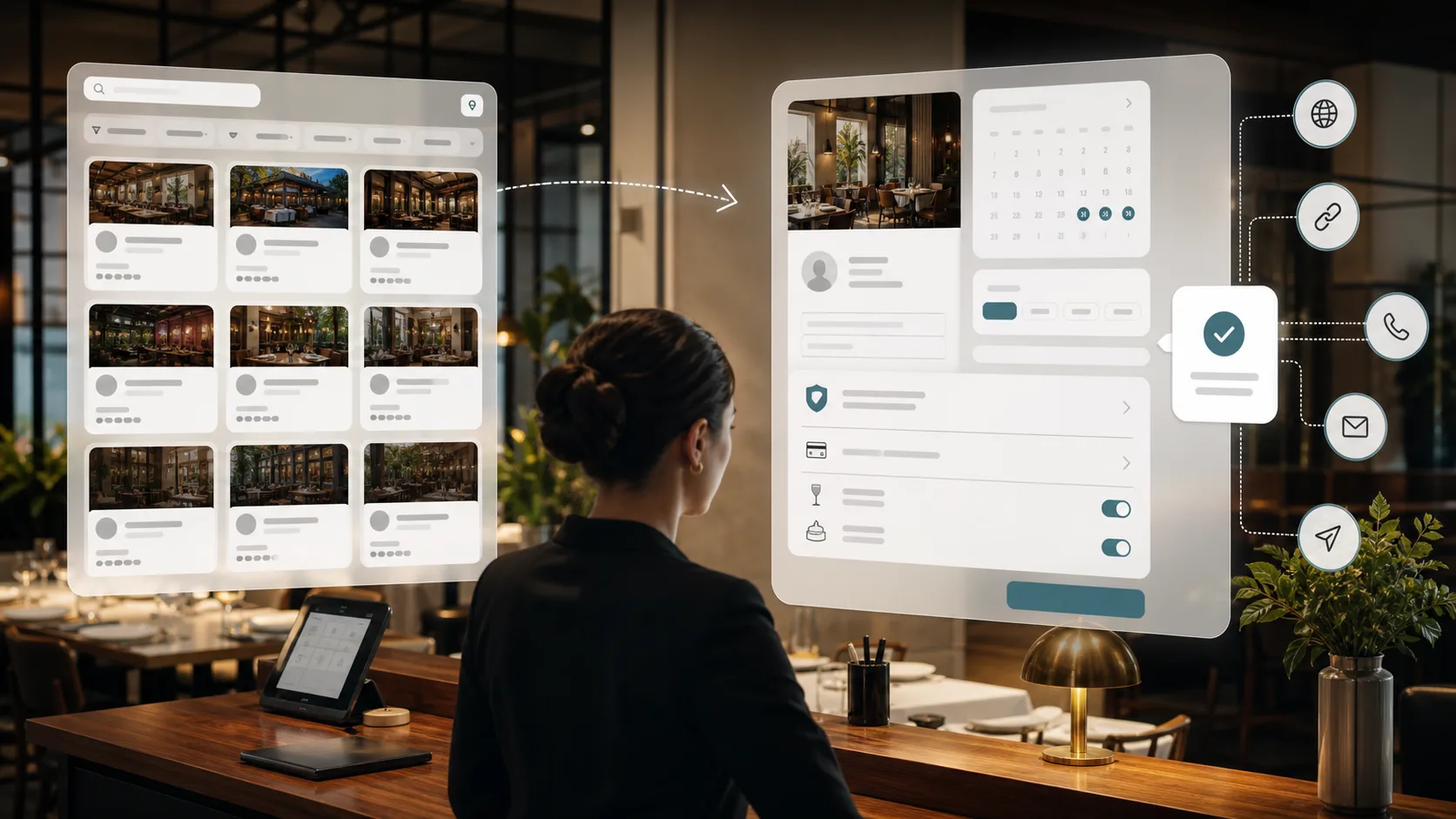
OpenTable is strongest when a restaurant wants marketplace discovery and a mature diner network. Reslify is built for restaurants that want direct booking ownership, branded guest journeys, and payment flexibility without treating every standard reservation like marketplace demand.
Reslify helps restaurants convert guests who already searched for the venue or arrived from owned channels.
White-label pages and widgets keep the guest inside a branded flow instead of a marketplace profile.
Deposits, prepayment, card holds, gift cards, and add-ons can live inside the same direct booking journey.
OpenTable is a major restaurant reservation platform with real strengths: a large diner marketplace, mature table management, booking integrations, marketing tools, guest profiles, experiences, deposits, and credit card holds. Its own restaurant-solutions pages highlight a global diner network, 65,000+ venues, 1.9 billion diners seated annually, and a pricing model built around subscription plans plus cover fees for certain booking sources.
For some restaurants, that marketplace is exactly the point. If the venue needs incremental discovery from undecided diners, OpenTable can make sense.
But many restaurants do not have a pure discovery problem. Their guests already know the restaurant. They search the restaurant by name, open the website, tap from Google, follow an Instagram link, call from a hotel recommendation, or return after a previous visit. In that situation, sending the guest through a marketplace can feel like paying for demand the restaurant already created.
That is where an OpenTable alternative becomes worth considering: not because OpenTable cannot take reservations, but because the restaurant wants more control over the direct booking relationship.
Do not compare OpenTable and Reslify only as two ways to put a reservation widget on a website. Compare the business model behind the booking.
OpenTable's official pricing page currently lists US plans at $149/month for Basic, $299/month for Core, and $499/month for Pro, with per-network-cover fees after the intro period and separate treatment for reservations from the restaurant website depending on plan. It also says Core and Pro cover fees apply to diners who discover the restaurant through OpenTable's website, app, or affiliate network, while website and phone bookings are treated differently.
That distinction matters. It shows the real decision: what kind of demand are you paying for?
| Question | OpenTable-style marketplace approach | Reslify direct booking approach |
|---|---|---|
| Where does demand come from? | A diner network, marketplace profile, affiliate network, ads, and the restaurant's own links. | The restaurant's own website, Google, Instagram, Reserve with Google, direct links, repeat guests, and branded campaigns. |
| Who owns the guest journey? | The guest may interact with a marketplace profile and marketplace booking experience. | The guest books through a white-label restaurant page or widget designed around the venue. |
| How is standard direct intake priced? | OpenTable publishes subscription fees and cover fees that vary by plan and source. | Reslify uses a flat platform subscription with no per-booking commission on standard direct reservation intake. |
| What is the strategic goal? | Get discovered by diners across a large reservation network. | Convert demand the restaurant already earns while keeping brand, data, payment rules, and operations aligned. |
| Where do revenue moments live? | OpenTable supports experiences, deposits, ticketing, and credit card holds within its platform model. | Deposits, prepayment, optional prepayment, card holds, add-ons, gift cards, and dining credits can sit inside the direct journey. |
| Best fit | Restaurants that want marketplace reach and are comfortable with network economics. | Restaurants that want direct ownership, branded conversion, flexible booking rules, and controlled guest data. |
Marketplaces can help when a guest is undecided. Someone searches a city, cuisine, neighborhood, date, or time, then compares many options. In that case, a marketplace can introduce a restaurant to a guest who might not have found it otherwise.
That is real value.
The problem is that many restaurant bookings are not born inside a marketplace. A guest may already know the venue and simply wants the easiest way to reserve. They search the restaurant by name, click the restaurant's site, open the Google Business Profile, or follow a social link. At that point, the restaurant has already created the demand.
For those bookings, the restaurant should ask:
This is the core argument for a direct booking system. Restaurants should still benefit from Google visibility and partner channels, but direct-intent guests should not have to pass through a marketplace layer if the restaurant can convert them itself.
An honest comparison should say where OpenTable is hard to beat.
OpenTable has a large consumer brand and a mature restaurant product. Its official pages promote discovery across OpenTable and partner sites, reservation management, table management, marketing, guest profiles, reviews, experiences, private dining, deposits, credit card holds, integrations, reporting, benchmarking, and 24/7 support. The platform also has decades of diner behavior and a familiar consumer interface.
OpenTable can be a strong fit when:
For restaurants that are demand-constrained and want a marketplace to help fill seats, this can be a reasonable trade.
Restaurants usually look beyond OpenTable when the marketplace model stops matching the way they want to grow.
Common triggers:
This is especially relevant for restaurants that are not trying to become more discoverable on a reservation marketplace. They are trying to own the guest relationship after the guest has already chosen them.
As of July 1, 2026, OpenTable's official US pricing page lists Basic, Core, and Pro subscription tiers and shows additional cover-fee rules by booking source. The page lists Basic at $149/month, Core at $299/month, and Pro at $499/month. It also shows network cover fees and a 2% service fee for prepaid experiences and prepaid ticketing.
OpenTable also states in its pricing FAQ that Core and Pro cover fees apply only when diners discover the restaurant through OpenTable's website, app, or affiliate network, and that website, phone, walk-in, no-show, and cancellation handling differs by plan and source.
The takeaway is not "OpenTable is expensive" in the abstract. The takeaway is that restaurants need to understand which bookings are being monetized and why.
| Economic question | Why it matters |
|---|---|
| How many bookings are truly incremental? | Marketplace fees make more sense when the platform brings guests the restaurant would not have reached otherwise. |
| How many bookings are direct-intent? | If guests already searched for the restaurant, the restaurant may prefer to convert them through its own booking flow. |
| Do standard direct bookings need a per-cover cost? | Reslify does not charge per-booking commission on standard direct reservation intake. |
| Where do paid transactions happen? | Deposits, prepayments, gift cards, and other checkout flows can carry app fees because money is moving through the platform. |
| Can the restaurant measure source quality? | Operators should compare seated guests, no-shows, spend, repeat visits, payment commitment, and guest ownership by source. |
For a restaurant with light direct traffic, marketplace reach may justify the economics. For a restaurant with strong brand demand, the more important question may be how to reduce friction and protect margin on bookings the venue already earned.
Premium restaurants care about the feeling of the booking experience. A guest does not separate the booking flow from the venue. If the page feels generic, cluttered, or detached from the restaurant's brand, it can weaken trust before the guest arrives.
Reslify is designed around white-label booking pages and embeddable widgets. The goal is to make the public booking journey feel like part of the restaurant, not a handoff to a directory.
That matters when the venue needs to communicate:
Brand control is not decoration. It helps guests understand the experience they are booking.
OpenTable supports deposits, credit card holds, experiences, and ticketing. That is important, and restaurants comparing alternatives should give OpenTable credit for it.
The difference is where Reslify puts those revenue moments. Reslify treats the booking journey as the commercial surface. A restaurant can use payment commitment and upsells without sending guests into a fragmented flow.
| Revenue moment | What Reslify is built to support |
|---|---|
| Card holds | Secure higher-risk bookings without charging every guest upfront. |
| Deposits | Take partial commitment for larger parties, premium tables, or special services. |
| Prepaid experiences | Sell tasting menus, chef's counters, events, and limited inventory before service. |
| Optional prepayment | Let guests choose pay-now or pay-later paths where the restaurant wants flexibility. |
| Add-ons | Offer champagne, flowers, cakes, upgrades, dining credits, or other configured enhancements. |
| Gift cards | Sell and redeem prepaid value without detaching the booking from the guest record. |
The key is context. A payment rule should understand date, time, party size, area, experience, add-ons, gift-card value, cancellation policy, and staff workflow. When those pieces sit together, the restaurant can protect revenue without making every booking feel heavy.
A reservation is not only a calendar entry. It is a signal about demand, source, intent, payment commitment, preferences, and guest history.
OpenTable offers guest profiles and relationship-management tools, especially in higher-tier plans. Reslify's angle is different: keep the guest relationship inside the restaurant's own direct booking ecosystem from the start.
That matters for teams that want to see:
The more a restaurant uses reservations as a revenue and service system, the more important that context becomes.
Many guests begin with Google, not with a reservation marketplace. They search the restaurant, read reviews, check hours, view photos, and look for the fastest path to book.
Reslify supports Reserve with Google and direct booking surfaces so Google demand can stay connected to the same live availability, service rules, payment logic, and branded booking path. The point is not to reject discovery channels. The point is to keep discovery from fragmenting the booking system.
For restaurants, the ideal flow is:
That is a different strategy from making a marketplace profile the center of the guest relationship.
Choose OpenTable if marketplace discovery is a central part of your growth strategy and you are comfortable with its plan structure, network cover model, and marketplace-led guest experience.
Choose Reslify if your priority is direct booking ownership: branded pages, owned guest context, Google and website conversion, flexible payment rules, no per-booking commission on standard direct reservation intake, and a booking journey that can support premium revenue moments.
| Restaurant priority | Better fit |
|---|---|
| We need more marketplace exposure from undecided diners. | OpenTable |
| Most guests already search for us directly or arrive from owned channels. | Reslify |
| We want a familiar consumer marketplace brand. | OpenTable |
| We want the public booking journey to feel native to our restaurant. | Reslify |
| We are comfortable paying for network demand when it is incremental. | OpenTable |
| We want no per-booking commission on standard direct reservation intake. | Reslify |
| We need deposits, card holds, prepayment, gift cards, and add-ons inside a direct flow. | Reslify |
| We want website, Google, Instagram, AI guidance, and staff operations aligned around one booking logic. | Reslify |
The decision is less about "reservation software" and more about demand ownership. If the restaurant wants a marketplace to create demand, OpenTable may be the right tool. If the restaurant wants to convert demand it already owns, Reslify is built for that job.
Before moving from OpenTable or any marketplace-led reservation platform, operators should map the transition carefully.
Reslify is a better fit when the answer is not simply "take reservations," but "own the relationship around the booking." Use the full restaurant reservation system migration checklist to plan data, future bookings, payments, channel cutover, staff training, and launch validation.
Yes, for restaurants that value marketplace discovery and believe OpenTable brings incremental diners they would not otherwise reach. The tradeoff is that the restaurant is operating inside a marketplace-led model, with plan and cover-fee rules that should be reviewed carefully.
A direct booking platform makes sense when guests already search for the restaurant by name or arrive from owned channels. In that case, the restaurant may care more about brand control, owned guest data, payment rules, and standard direct booking economics than marketplace exposure.
Reslify does not charge per-booking commission on standard direct reservation intake. When money moves through checkout flows such as deposits, prepayments, gift cards, or other paid transactions, app fees are included.
Reslify supports Reserve with Google and direct booking surfaces, so Google and search demand can use the same availability and booking rules as the restaurant website. The goal is to keep Google, website, Instagram, and staff-entered bookings aligned instead of fragmented.
Reslify supports flexible payment rules including deposits, prepayment, optional prepayment, and card holds. Restaurants can apply stronger commitment to the bookings that need protection while keeping low-risk bookings simple.
No. Reslify is useful for any restaurant that wants direct booking control, but it is especially strong for venues and groups that care about brand presentation, guest ownership, Google visibility, payment protection, add-ons, gift cards, and high-value experiences.
This comparison uses publicly available OpenTable restaurant-solution pages, including its restaurant solutions overview, plans and pricing, diner network, reservation management, and experiences pages, checked on July 1, 2026.
Compare Quandoo alternatives for restaurants that need to replace online reservations before Quandoo stops new bookings on 30 September 2026.
Read moreComparisonCompare SevenRooms with Reslify for restaurants that want branded direct bookings, AI-guided guest journeys, payments, and clearer ownership.
Read moreComparisonCompare restaurant reservation systems for direct bookings, marketplace reach, guest data, payments, Google visibility, and branded booking control.
Read more